

ELITE GEL

2,00 €
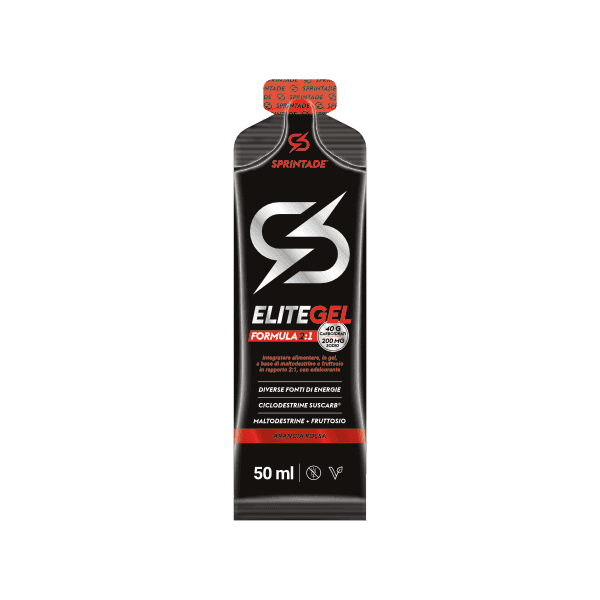
SPRINTADE® ELITE GEL Formula 2:1 is a food supplement in gel based on maltodextrin and fructose in a 2:1 ratio. It is enriched with Suscarb® cyclodextrins and fructose-1,6-diphosphate.
INGREDIENTS: maltodextrin (40%), water, fructose (20%), highly branched cyclic dextrin (0.8%), sodium chloride, acidifier: citric acid; fructose-1,6-diphosphate (0.4%); potassium citrate, acidity regulator: sodium citrate; thickener: xanthan gum; preservatives: potassium sorbate, sodium benzoate; sweetener: sucralose; flavorings.
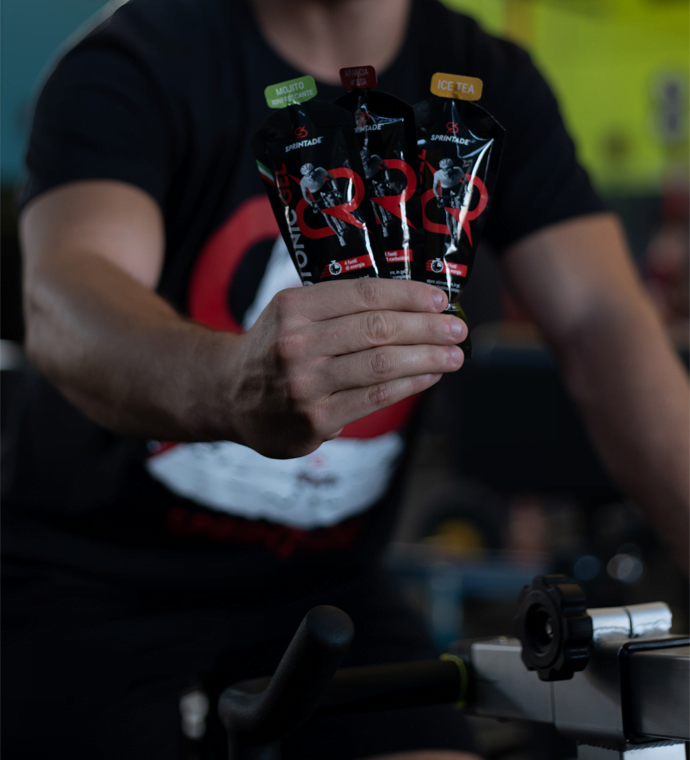
HOW TO USE: Consume 1–2 gels per hour of sports activity. One gel provides 40 g of carbohydrates in a 2:1 maltodextrin-to-fructose ratio.
WARNINGS: Do not exceed the recommended daily dose. Keep out of reach of children under 3 years of age. Dietary supplements are not intended as a substitute for a varied, balanced diet and a healthy lifestyle.
STORAGE INSTRUCTIONS: Store in a cool, dry place, away from direct sunlight and heat sources. The best-before date applies to the product when stored correctly in its original, unopened packaging. Do not litter; dispose of according to local waste sorting regulations.
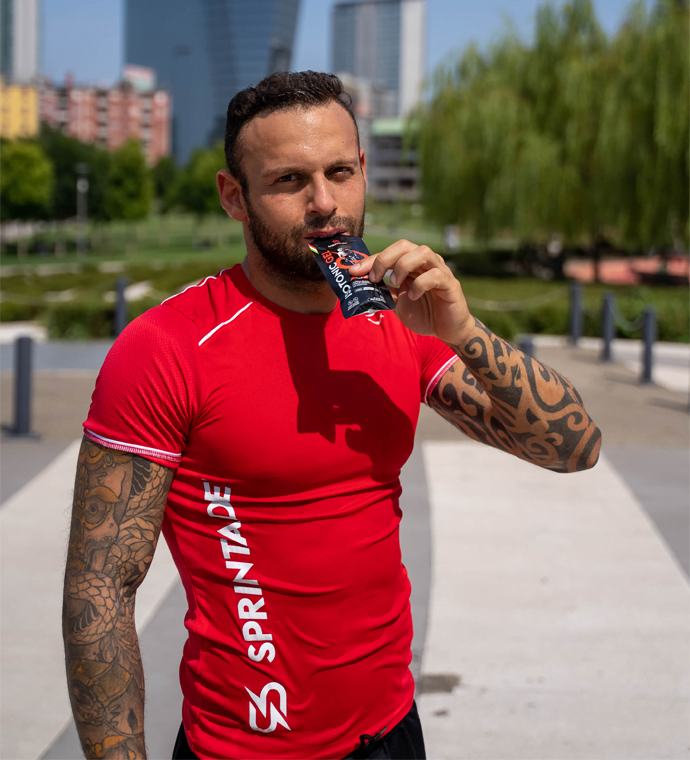
How many carbohydrates should be consumed during training or a race?
The amount of carbohydrates to consume during exercise depends on the duration, intensity, and an individual’s tolerance.
Traditional guidelines generally suggest:
- small amounts of carbohydrates for high-intensity activities lasting around one hour;
- approximately 30–60 g of carbohydrates per hour for activities lasting 1–3 hours;
- up to approximately 90 g per hour for prolonged endurance events, using carbohydrate sources that utilize different intestinal transport pathways.
However, recent research is exploring even more advanced strategies. Some studies on highly trained athletes have tested intakes of 120 g of carbohydrates per hour, while intake levels between 120 and 130 g/h are sometimes reported in professional practice.
These protocols represent the cutting edge of endurance nutrition and should not be viewed as dosages suitable for everyone. They require precise planning, progressive gut training, and careful management of carbohydrates, water, and electrolytes.
Beyond 90 grams per hour: what does the research say?
A study by Podlogar et al. compared an intake of 120 g/h with 90 g/h during three hours of cycling in highly trained athletes.
The 120 g/h protocol resulted in higher exogenous carbohydrate oxidation: during the 120–180 minute phase, average oxidation was 1.51 g/min compared to 1.29 g/min with the 90 g/h protocol.
The study demonstrates that, in trained athletes and under controlled conditions, the body can absorb and utilize amounts exceeding the traditional 90 g/h limit. However, no further sparing of endogenous carbohydrate stores was observed, and the authors themselves highlighted the need for further studies on the direct effects on performance.
40 grams of carbohydrates in a single gel
Each Elite Gel Formula 2:1 provides 40 grams of carbohydrates. This amount makes it easy to build and calculate your nutritional plan:
- 1 gel every 60 minutes: 40 g of carbohydrates per hour;
- 1 gel every 45 minutes: approximately 53 g of carbohydrates per hour;
- 1 gel every 30 minutes: 80 g of carbohydrates per hour;
- 3 gels in one hour: 120 g of total carbohydrates.
Mathematical equivalence does not automatically constitute a recommendation for use. For most athletes, the Elite Gel 2:1 ratio is most rationally applied within strategies ranging roughly from 40 to 80 g/h.
Intakes of 90 up to 120–130 g/h fall under advanced protocols, which must also take into account the overall glucose-to-fructose ratio, other carbohydrate sources, water availability, and gastrointestinal tolerance.
Why is the 2:1 ratio a strategic choice?
The 2:1 ratio combines two parts of carbohydrates derived from maltodextrin with one part of fructose.
Glucose released from maltodextrin is absorbed primarily via the SGLT1 intestinal transporter, whereas fructose mainly utilizes the GLUT5 transporter. The presence of two sources therefore allows absorption to be distributed across different intestinal pathways.
This strategy is of particular interest when intake exceeds the levels normally sustainable with a single glucose source. In a study by Jentjens and Jeukendrup, a mixture of glucose and fructose resulted in higher exogenous carbohydrate oxidation rates compared to an equivalent amount of glucose alone.
In another study, Currell and Jeukendrup observed an 8% improvement in time-trial performance among trained cyclists using a glucose-fructose combination compared to glucose alone, under the specific experimental conditions employed.
Elite Gel Formula 2:1 is based on this principle: utilizing multiple absorption pathways to create a more advanced energy strategy than one based solely on glucose or maltodextrins.
How to take Elite Gel during training or racing
Your strategy should be tested and refined during training. It is not advisable to experiment with a high carbohydrate intake for the first time during a major competition.
For activities lasting between 90 minutes and 3 hours, a general guideline is to consume one gel every 45–60 minutes, equating to approximately 40–53 g of carbohydrates per hour.
For longer events, athletes already accustomed to high carbohydrate intakes may consume one gel every 30 minutes, reaching 80 g/h. Any strategies involving higher amounts must be developed individually, taking into account the total carbohydrates from gels, sports bottles, bars, and solid food.
The gel can be consumed all at once or split into two or three smaller servings taken in quick succession. As it is a concentrated product, it should be consumed with water from your sports bottle.
As a practical guide:
- take the first gel about 30–45 minutes after starting the activity;
- continue with one gel every 45–60 minutes;
- drink water during or immediately after consumption;
- include the carbohydrates found in your drinks in your total count;
- gradually increase your hourly target during training sessions;
- use protocols of 80 g/h or higher only after verifying your tolerance.
Why train the gut?
The digestive system can progressively adapt to processing larger amounts of carbohydrates during exercise. This process is known as “gut training.”
An athlete accustomed to consuming 30–40 g/h should not jump straight to 90, 120, or 130 g/h. The progression must be gradual and practiced under conditions that closely mimic race-day scenarios. The goal is not to consume the absolute highest amount possible, but rather to identify the maximum intake that the athlete can effectively absorb, utilize, and tolerate without compromising performance.
Is it possible to consume 120 or 130 g of carbohydrates per hour?
Recent studies have shown that highly trained athletes can absorb and oxidize carbohydrates at rates as high as 120 g/h by using specific combinations of maltodextrin and fructose.
Intake levels approaching 130 g/h have been reported among some professionals, but this does not yet constitute a general recommendation. These are extremely advanced protocols that should be developed progressively, preferably with the guidance of a sports nutritionist.
How many Elite Gels should be consumed per hour?
One gel provides 40 g of carbohydrates. Consuming one gel every 45–60 minutes yields approximately 40–53 g/h, while two gels per hour provide 80 g/h.
Mathematically, three gels would equate to 120 g/h; however, this quantity should not be attempted haphazardly or determined solely by the number of gels. At higher intake levels, the overall ratio of different carbohydrate sources, water intake, and gastrointestinal training become critical factors.
⎯
Frequently Asked Questions about Sprintade ELITE 2:1 Energy Gel
How many carbohydrates are in a gel?
Each 50 ml gel provides 40 grams of carbohydrates. Consuming one packet per hour therefore provides 40 g/h, while two packets provide 80 g/h.
What does “2:1 energy gel” mean?
It means the carbohydrate component is formulated using maltodextrin and fructose in a 2:1 ratio. These two sources utilize different intestinal absorption pathways and can facilitate greater utilization of exogenous carbohydrates when hourly intake is high.
Why combine maltodextrin and fructose?
Maltodextrin provides glucose units, while fructose utilizes a different intestinal transport pathway. Combining them allows absorption to be distributed across multiple transporters, unlike when using a single carbohydrate source.
Does the 2:1 gel improve performance?
Research shows that carbohydrate intake during prolonged exercise can support performance. In a study involving cyclists, a glucose-fructose blend improved performance by 8% compared to glucose alone. However, an individual athlete’s results depend on their overall strategy, training, dosage, tolerance, and race conditions.
Should I drink water after the gel?
Yes. The Elite 2:1 Gel Formula contains 40 grams of carbohydrates in just 50 ml, making it a concentrated product. It should be consumed with water—ideally from a sports bottle—either during or immediately after taking the gel.
How much water should I drink with a gel?
As a general guideline, you can consume approximately 250–300 ml of water per gel. However, the total amount should be adjusted based on temperature, humidity, exercise intensity and duration, and individual sweat rates. How many gels should be consumed during a race?
It depends on the duration and the carbohydrate intake target. One gel every 45–60 minutes provides approximately 40–53 g/h. One gel every 30 minutes brings the intake to 80 g/h; this strategy is intended for prolonged activities and for athletes who have already trained their gastrointestinal tolerance.
When should the first gel be taken?
For prolonged activities, it is best to start fueling before feeling a noticeable drop in energy. As a general guideline, the first gel can be taken after 30–45 minutes, continuing thereafter according to the established plan.
Does the gel contain sodium?
Yes. The formula provides sodium, an electrolyte lost through sweat. In very long events, sodium intake should be considered alongside the sodium provided by drinks and other products being used.
- Currell and Jeukendrup, 2008 – Multiple transportable carbohydrates and performance
- Jentjens and Jeukendrup, 2005 – Glucose and fructose oxidation
- Jeukendrup, 2014 – Carbohydrate intake during exercise
- Coyle et al., 1983 – Carbohydrate intake during exercise and the onset of fatigue
Related products
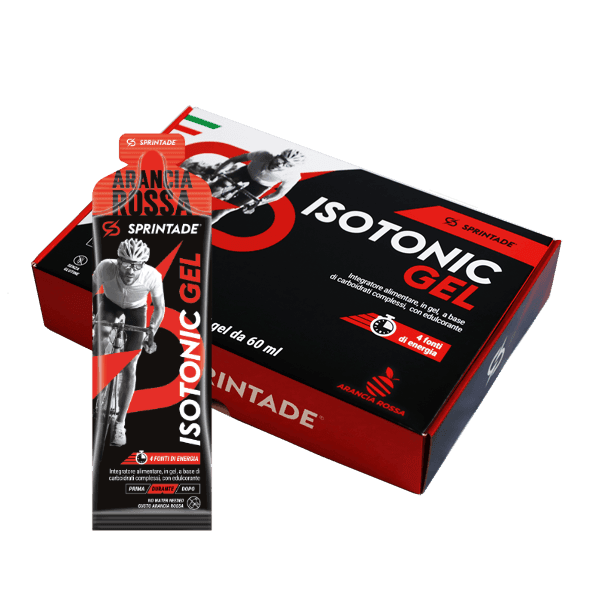
ISOTONIC GEL "La valigetta"

Nitred® Isotonic Saline

CreafOS®