11/09/26
 4
4

One of the most long-standing issues in the world of fitness has always been the question of how much protein to consume per meal. The most persistent myth is precisely that the body cannot process, ‘absorb’ or assimilate more than 30g of protein at a time.
The 2023 study by Trommelen et al., published in Cell Reports Medicine, finally comes to our aid. This clinical study definitively challenges the classic notion of ‘a maximum of 20–30g of protein per meal’.
How the study was conducted
Following a full-body resistance training session, young men were randomised into three groups:
- 0 g of protein → placebo
- 25 g of protein
- 100 g of protein
Isotopically labelled milk proteins were used, along with a sophisticated four-tracer system, which made it possible to accurately track digestion, the appearance of amino acids in the blood and their incorporation into tissues. Measurements continued for 12 hours, much longer than the typical 4–6-hour studies.
The key finding
The 100 g were not simply ‘wasted’.
Compared with 25 g, the intake of 100 g resulted in a greater anabolic response and, above all, one that was much more prolonged, lasting beyond 12 hours. There was an increase in both muscle protein synthesis and myofibrillar, muscle connective tissue and whole-body protein synthesis.
In particular, the availability in the blood of amino acids derived directly from the ingested protein over the 12-hour period was:
25 g → approximately 16 ± 1 g
100 g → approximately 53 ± 7 g
And with the 100 g dose, absorption had not yet reached a plateau after 12 hours.
Myofibrillar protein synthesis was also significantly higher with 100 g compared to 25 g: a subsequent analysis/commentary quantifies the difference at approximately +20 per cent in the first 4 hours and around +40 per cent between 4 and 12 hours.
So, ‘is there no limit to assimilation’?
We must make an important distinction.
The study debunks the idea that, beyond 20–30 g, protein is not absorbed or is automatically ‘wasted’. The 100 g are digested progressively and fuel a larger and longer-lasting anabolic response.
The authors themselves conclude:
The magnitude and duration of the anabolic response to protein intake are not limited
But this does not necessarily mean that 100 g are four times more anabolic than 25 g. In fact, 100 g represent four times the dose, whilst the increase in MPS (muscle protein synthesis) is far less than fourfold. A recent review highlights precisely this distinction and notes that there may still be a dose beyond which the marginal gain in MPS diminishes.
Therefore, the scientifically most accurate wording for an article would be:
Contrary to the widespread belief that the body can utilise only 20–30 g of protein per meal, a study using isotopic tracers has shown that consuming 100 g of protein after exercise produces greater and more prolonged muscle protein synthesis than 25 g, with an anabolic response maintained for over 12 hours.
To put it more clearly: the more protein consumed, the greater the muscle protein synthesis, but the relationship is not directly proportional and the response varies from person to person. A considerable proportion of the protein consumed will be metabolised to utilise its amino acids for hormonal or functional purposes; or it will be converted into energy or fat if there is a sufficient calorie surplus
What, then, promotes greater utilisation of ingested protein in muscle synthesis?
The most important factor in training is probably the mechanical stimulus. The tension produced by the fibres during resistance training is converted into intracellular signals — mechanotransduction — which primarily converge on the mTORC1 pathway, increasing protein translation. Repeating this stimulus over time leads to hypertrophic adaptation.
Added to this are androgenic factors, testosterone levels, genetic factors and, of course, total calorie intake.
How can one achieve such high protein pools?
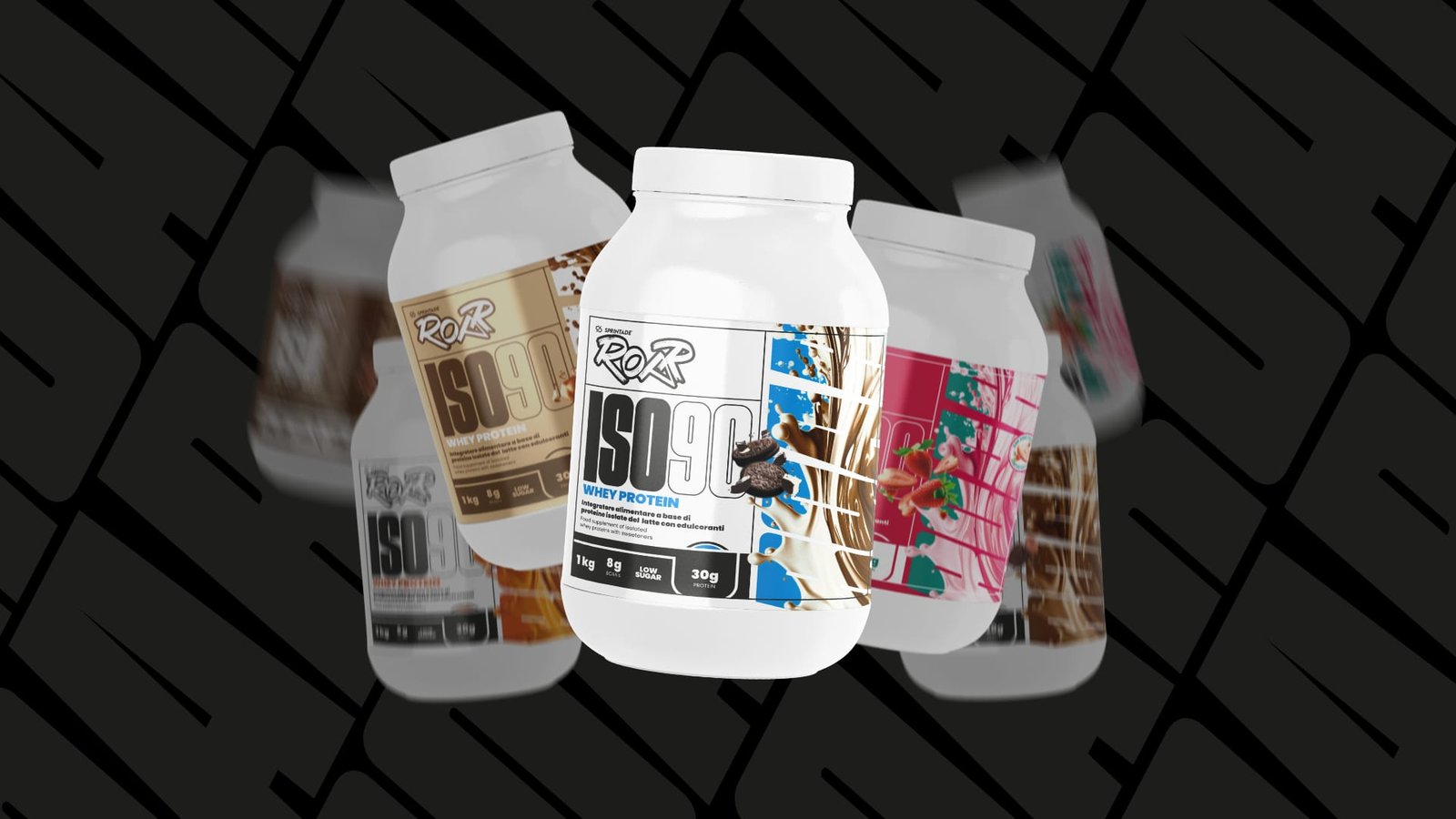
One of the most common solutions adopted by modern athletes and bodybuilders is the consumption of whey protein, which is highly bioavailable. Products such as ROAR ISO90, with a high protein concentration per scoop, are therefore of great help.
After ingestion, proteins are digested into peptides and amino acids. What matters to the muscle, therefore, is primarily the available amino acid pool, not the presence of ‘whole proteins’ in the blood.
Whey proteins have three beneficial characteristics: they are easily digestible, have a high proportion of essential amino acids (EAAs) and are particularly rich in leucine, which also plays a signalling role in the activation of mTORC1 and, consequently, of MPS.
As a rough guide, a good-quality whey protein contains around 10–12 per cent leucine by weight of protein. A 25–30 g serving of whey protein therefore provides around 2.5–3.5 g of leucine – or even more, as in the case of ROAR protein – as well as a significant amount of the other EAAs.
Conclusion: more protein means more protein synthesis, relative to your own level
In conclusion, if the aim is to increase or maintain muscle mass and you are being monitored by a nutritionist, your daily protein intake must be carefully calibrated, without giving credence to urban myths that have already been disproved by evidence: athletes with high muscle volume, tone or strength have almost always described themselves as high protein consumers.