26/11/26
 3


1,000 IU of vitamin D3 equals 25 micrograms (µg). 2,000 IU equals 50 micrograms. The rule is simple: 1 µg of vitamin D = 40 IU. If the package also lists vitamin K2, its amount is given separately, in micrograms per dose. [1, 2]
In winter, when people spend less time outdoors and the available UVB radiation varies with the season and latitude, the skin can produce less vitamin D. To compare two supplements, convert the amounts to the same unit and check how many capsules or drops they refer to. [1]
From UI to micrograms
UI are international units. µg express the mass of the vitamin. To convert from UI to micrograms, divide by 40. To do the reverse, multiply by 40.
| Vitamin D3 in IU | Vitamin D3 in µg | %NRV on EU label |
|---|---|---|
| 200 IU | 5 µg | 100% |
| 400 IU | 10 µg | 200% |
| 600 IU | 15 µg | 300% |
| 800 IU | 20 µg | 400% |
| 1,000 IU | 25 µg | 500% |
| 2,000 IU | 50 µg | 1,000% |
The Nutrient Reference Value (NRV) used in European labelling is 5 µg for vitamin D. This is why a 25 µg dose shows 500% NRV. The percentage expresses the ratio to the labelling reference. How much to take depends on individual circumstances.
How to compare the daily dose
At the same daily dose, 2,000 IU provides twice the vitamin D3 of 1,000 IU. If a label declares 1,000 IU per capsule and recommends two capsules a day, the daily intake is already 2,000 IU. Another product might declare 2,000 IU per daily dose directly, with the same total intake.
| Label example | Stated daily dose | Vitamin D3 per day |
|---|---|---|
| 25 µg per capsule | 1 capsule | 25 µg · 1,000 IU |
| 25 µg per capsule | 2 capsules | 50 µg · 2,000 IU |
| 50 µg per daily dose | 1 capsule | 50 µg · 2,000 IU |
The same check applies to drops. Find how many drops make up the daily dose and read the quantity referred to that dose. If you also take a multivitamin containing vitamin D, add up the intakes after expressing them all in µg or all in IU.
How to read the D3 and K2 amounts
Vitamin D3, also called cholecalciferol, contributes to the normal absorption and use of calcium and phosphorus and to the maintenance of normal bones. Vitamin K contributes to the maintenance of normal bones and to normal blood clotting. K2 identifies a family of forms of vitamin K. The designation MK-7 specifies the type of menaquinone used.
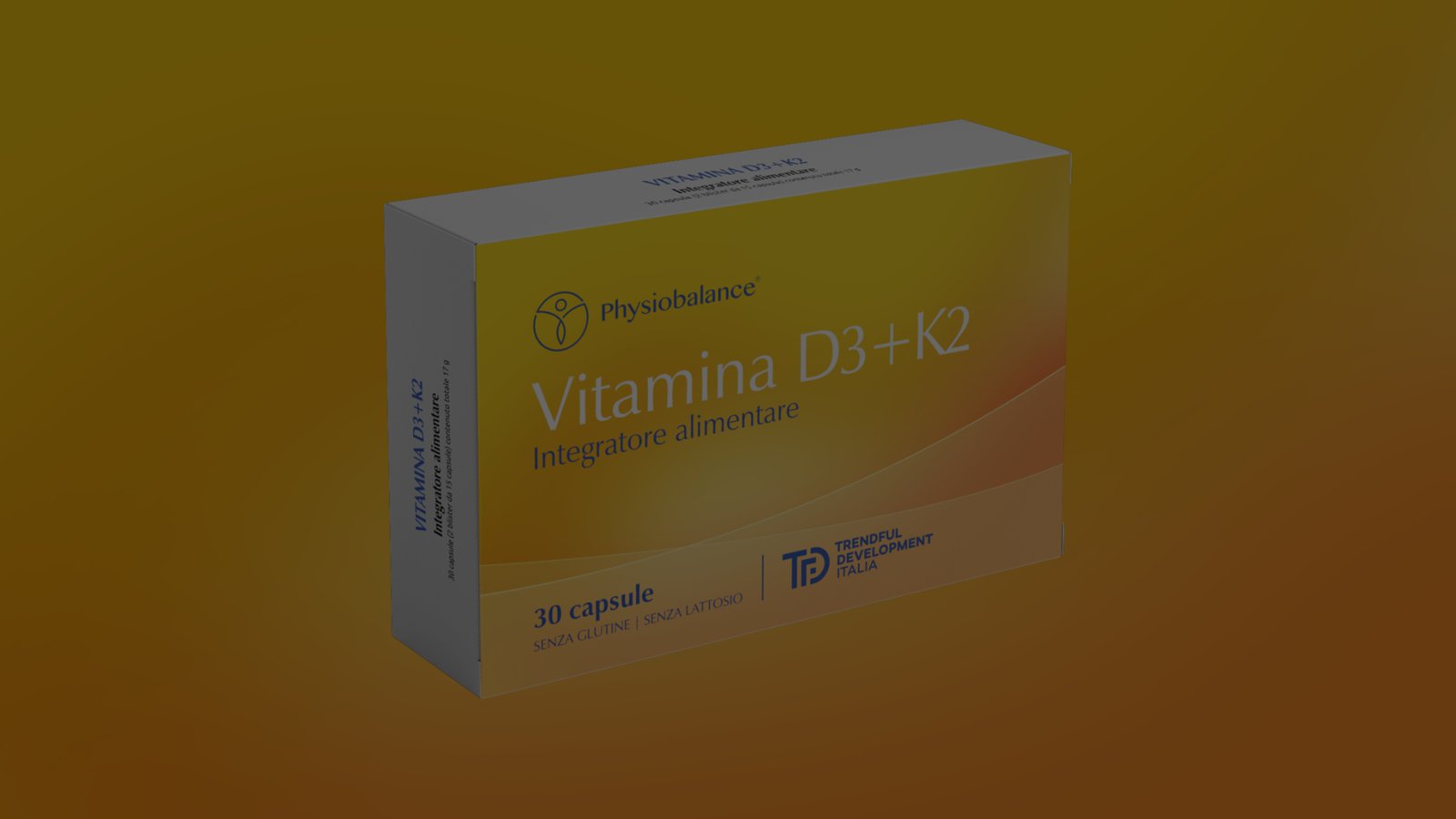
Label example with D3 25 µg and K2 75 µg per daily dose.
| Item | How to read it |
|---|---|
| Vitamin D3 · 25 µg | Equals 1,000 IU and 500% NRV of vitamin D. |
| Vitamin K2 · 75 µg | Corresponds to 100% NRV of vitamin K. The European NRV refers to total vitamin K. |
The factor of 40 IU per µg applies to vitamin D. K2 is compared directly in µg per daily dose. Anyone taking vitamin K antagonists, such as warfarin or acenocoumarol, should consult their doctor before starting a supplement containing K2.
When to consider vitamin D3 in winter
Winter can reduce the skin’s synthesis of vitamin D. To assess whether supplementing is needed and which dose to choose, the key factors are habitual exposure to sunlight, diet, age and individual conditions. If the concern is a possible deficiency, the doctor may consider whether a blood test for 25-hydroxyvitamin D, reported on the test result as 25(OH)D, is useful.
In Italy, AIFA Note 96 sets the criteria for prescribing certain medicines for the prevention and treatment of deficiency in adults at the expense of the National Health Service.
Frequently asked questions
How many IU are 50 µg of vitamin D3?
It is 2,000 IU. You get it by multiplying 50 by 40.
Why does 1,000 IU of vitamin D3 show 500% NRV?
Because 1,000 IU corresponds to 25 µg, which is five times the European labelling reference of 5 µg.
Do 25 µg of vitamin D3 and 25 µg of K2 have the same %NRV?
25 µg of vitamin D corresponds to 500% NRV, while 25 µg of vitamin K corresponds to about 33% NRV. The European references are 5 µg and 75 µg respectively.
Sources
[1] NIH Office of Dietary Supplements · Vitamin D: https://ods.od.nih.gov/factsheets/VitaminD-HealthProfessional/
[2] Regulation (EU) No 1169/2011 · Annex XIII: https://eur-lex.europa.eu/legal-content/IT/TXT/?uri=CELEX:32011R1169
[3] AIFA · Note 96: https://www.aifa.gov.it/documents/20142/1728113/nota-96.pdf
[4] Regulation (EU) No 432/2012 · Health claims: https://eur-lex.europa.eu/legal-content/IT/TXT/?uri=CELEX:32012R0432
[5] NIH Office of Dietary Supplements · Vitamin K: https://ods.od.nih.gov/factsheets/VitaminK-HealthProfessional/
Publication note
The D3 and K2 values are examples of how to read the label. Link the text “Vitamin D3 + K2” to the official Sprintade product page once the URL and the reference dosage are confirmed.